

Retatrutide Side Effects: What TRIUMPH Phase 3 Trial Data Shows
Retatrutide Side Effects: What Phase 3 Trial Data Shows
- Nausea is the most common: 43% at 12 mg vs 10% placebo (TRIUMPH-4)
- Dysaesthesia (~20% at 12 mg) is unique to retatrutide — not seen with tirzepatide or semaglutide
- Discontinuation: 12.2–18.2% vs 4% placebo — mainly GI-related, mainly during escalation
- Heart rate increase: 5–10 bpm — dose-dependent, peaks around week 24
- Serious adverse events: rare (<1%); safety profile broadly acceptable in Phase 3
- Most GI side effects resolve significantly at 8–12 weeks on a stable dose
Understanding retatrutide's side effect profile is essential for anyone researching this triple agonist. The TRIUMPH Phase 3 programme has now generated substantial human safety data — including the December 2025 TRIUMPH-4 topline results — that allows a detailed, evidence-based picture of what to expect.
The headline: retatrutide has a real side effect burden that is somewhat higher than tirzepatide and semaglutide — but it also produces substantially more weight loss. Whether the trade-off is acceptable depends on context and individual tolerance.
Complete Side Effect Profile from TRIUMPH Phase 3
| Side Effect | Frequency | Severity | Notes |
|---|---|---|---|
| Nausea | 38.1% (9 mg), 43% (12 mg) | Mild–moderate | Most common; peaks during escalation; improves at stable dose |
| Vomiting | High (exact % pending full publication) | Mild–moderate | Phase 2 showed 60–80% any GI at ≥8 mg; reduces over time |
| Diarrhea | Elevated vs placebo | Mild | Common during early titration; usually self-resolving |
| Constipation | Elevated vs placebo | Mild | More common at higher doses; hydration critical |
| Abdominal pain / discomfort | Part of 60–80% GI cluster | Mild–moderate | Typically during escalation; food timing helps |
| Dysaesthesia ⚠️ | ~20% at 12 mg | Mild | Unique to retatrutide; abnormal skin sensation; rarely causes discontinuation |
| Heart rate increase | 20–30% report palpitations | Mild | 5–10 bpm increase; peaks at ~week 24; relevant for cardiac history |
| Injection site reactions | 5–15% | Mild | Redness, itching, transient swelling; site rotation resolves most cases |
| Fatigue / decreased energy | Reported at escalation steps | Mild–moderate | Particularly at 8 mg step; reflects significant metabolic shift |
| Acute pancreatitis | <1% | Serious | Rare; no confirmed causal link established in TRIUMPH |
| Gallstones / biliary events | <1% | Serious | Class-level GLP-1 risk; monitor with rapid weight loss |
| Liver enzyme elevation | Transient, rare | Mild | Typically transient and self-resolving; monitor in liver disease |
Legend: Common GI effects Unique to retatrutide Rare / serious
Dysaesthesia: The Side Effect Unique to Retatrutide
The most scientifically notable finding from TRIUMPH-4 (December 2025) was the confirmation of dysaesthesia as a distinct, retatrutide-specific safety signal. Dysaesthesia refers to abnormal, often unpleasant sensations in the skin — described variously as tingling, burning, prickling, or numbness.
Key facts about retatrutide dysaesthesia:
- Affects approximately 1 in 5 participants on the 12 mg dose
- Absent in tirzepatide (dual GIP/GLP-1) and semaglutide (GLP-1 only) data
- Believed to be related to glucagon receptor activity — the third receptor targeted by retatrutide
- Classified as mostly mild in severity
- Rarely required dose reduction or discontinuation
- Onset and resolution pattern not yet fully characterised from published TRIUMPH-4 data
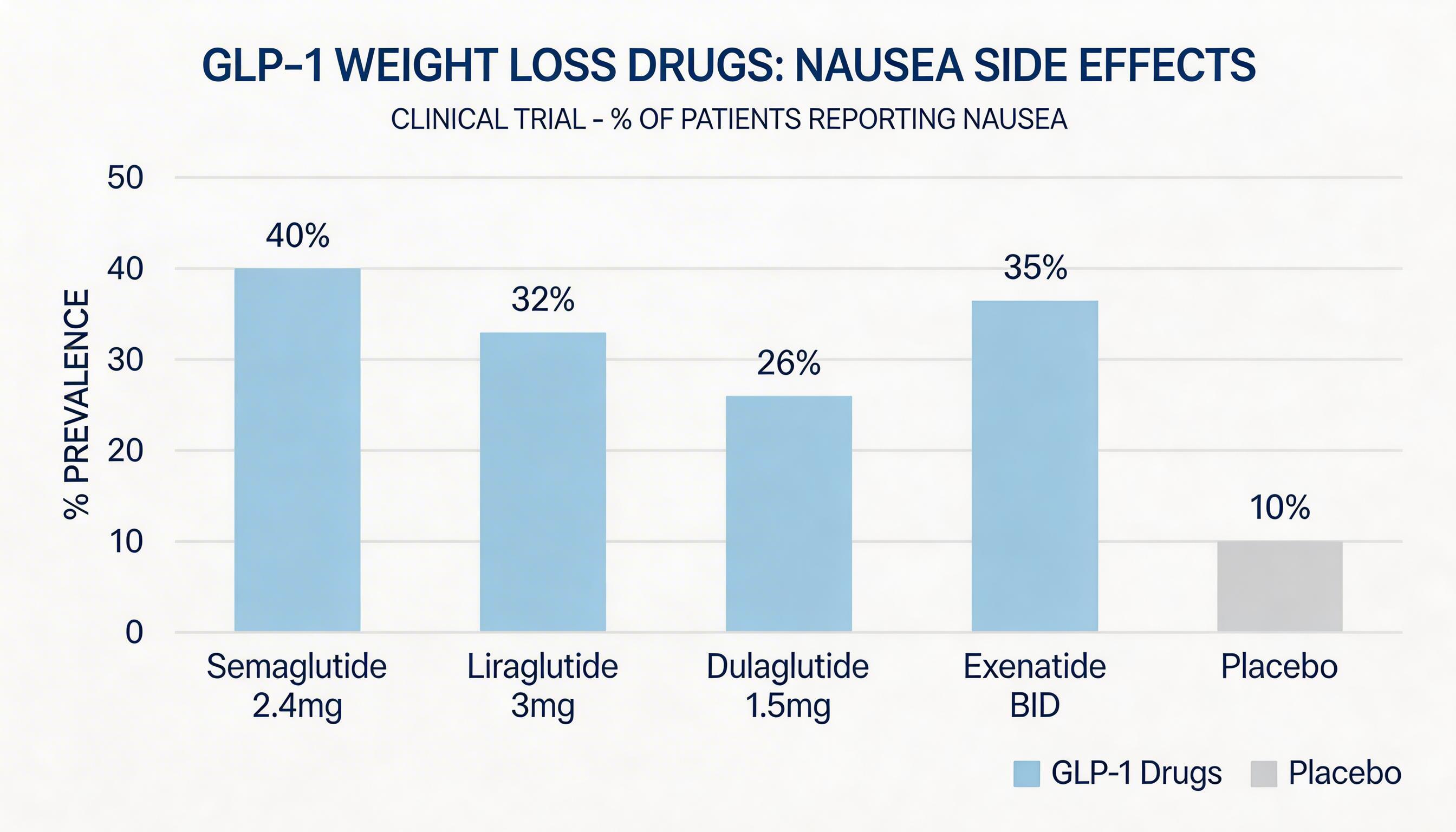
How Retatrutide Compares to Tirzepatide and Semaglutide
| Side Effect | Retatrutide (12 mg) | Tirzepatide (15 mg) | Semaglutide (2.4 mg) |
|---|---|---|---|
| Nausea | 43% | ~33% | ~44% |
| Vomiting | High (TRIUMPH data) | ~23% | ~25% |
| Diarrhea | Elevated | ~23% | ~30% |
| Dysaesthesia | ~20% | Not reported | Not reported |
| Heart rate increase | 5–10 bpm | ~2–4 bpm | ~2–3 bpm |
| Discontinuation rate | 12–18% | ~5–7% | ~7–10% |
| Weight loss at ~48–68 weeks | 24–28.7% | ~20.9% | ~14.9% |
The key trade-off
Retatrutide has a higher discontinuation rate and a unique dysaesthesia signal compared to tirzepatide and semaglutide. However, it also produces 4–14 percentage points more weight loss. The higher side effect burden is consistent with the stronger metabolic effect — particularly the added glucagon receptor activity. Slow titration is the primary tool to manage this.
Managing Retatrutide Side Effects
For GI Effects (Nausea, Vomiting, Diarrhea)
- Eat smaller, more frequent meals — 4–5 small meals instead of 3 large ones
- Avoid high-fat, spicy, or large-volume meals — especially on injection day
- Stay hydrated — GI symptoms worsen with dehydration
- Ondansetron (Zofran) — effective anti-nausea medication; discuss with a healthcare provider
- Ginger — clinically supported for nausea reduction
- Time injection in the evening — many researchers find that injecting before bed reduces daytime nausea
For Dysaesthesia
- Typically resolves or becomes tolerable without intervention
- If persistent: dose reduction to 8 mg often eliminates it while preserving most weight loss benefit
- Document onset, location, and severity for any research records
For Heart Rate Increase
- 5–10 bpm increase is expected and not harmful in healthy individuals
- Monitor resting heart rate periodically, particularly during escalation
- Researchers with pre-existing cardiac conditions should evaluate suitability carefully before starting
When to Pause or Stop
Frequently Asked Questions
What is the most common side effect of retatrutide?
Nausea — occurring in 38.1% (9 mg) to 43% (12 mg) of TRIUMPH-4 participants, compared to 10% placebo. It is most intense during dose escalation and typically improves after 8–12 weeks on a stable dose.
What is retatrutide dysaesthesia?
An abnormal skin sensation (tingling, burning, or numbness) affecting ~20% of 12 mg users. It is unique to retatrutide — not seen with tirzepatide or semaglutide — and is believed to be linked to glucagon receptor activity. Usually mild and rarely causes discontinuation.
How does retatrutide compare for side effects vs tirzepatide and semaglutide?
Broadly similar GI profile, but with a unique dysaesthesia signal, higher discontinuation rate (12–18% vs ~5–10%), and larger heart rate increase. The trade-off: retatrutide produces 4–14% more weight loss than either comparator.
What percentage stop taking retatrutide due to side effects?
12.2% at lower doses and 18.2% at 12 mg in TRIUMPH-4, compared to 4% placebo. Most discontinuations were GI-related and occurred during escalation.
Does retatrutide cause serious adverse events?
Serious events (pancreatitis, gallstones) are rare (<1%). Phase 2 data showed a 4% serious AE rate — matching placebo. TRIUMPH-4 confirmed an acceptable overall safety profile.
Research-Grade Retatrutide in UAE
CoreSup stocks verified retatrutide with Certificate of Analysis for UAE researchers.
View Retatrutide
CoreSup stocks pharmaceutical-grade bacteriostatic water (10ml, 0.9% benzyl alcohol) with same-day delivery across Dubai and all UAE emirates.
Shop Bacteriostatic Water →Shop Featured Products


Related Products


Written by Amir Arsalan
Core Sup Research Team · Peptide & Supplement Specialists, Dubai UAE
Core Sup's editorial team is composed of specialists in peptide therapy, SARMs, and sports supplementation with direct experience in the UAE market. All content is written to current research standards and reviewed before publication.
Last reviewed: March 2026 · About Core Sup


